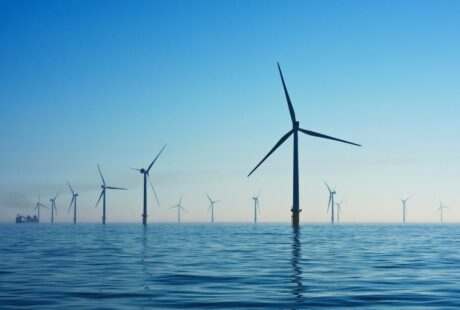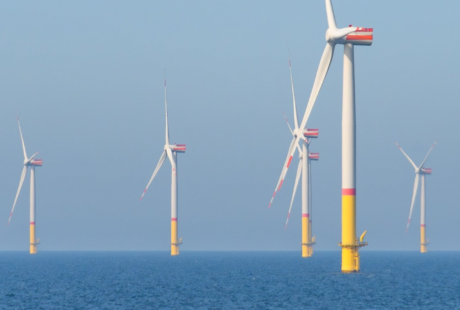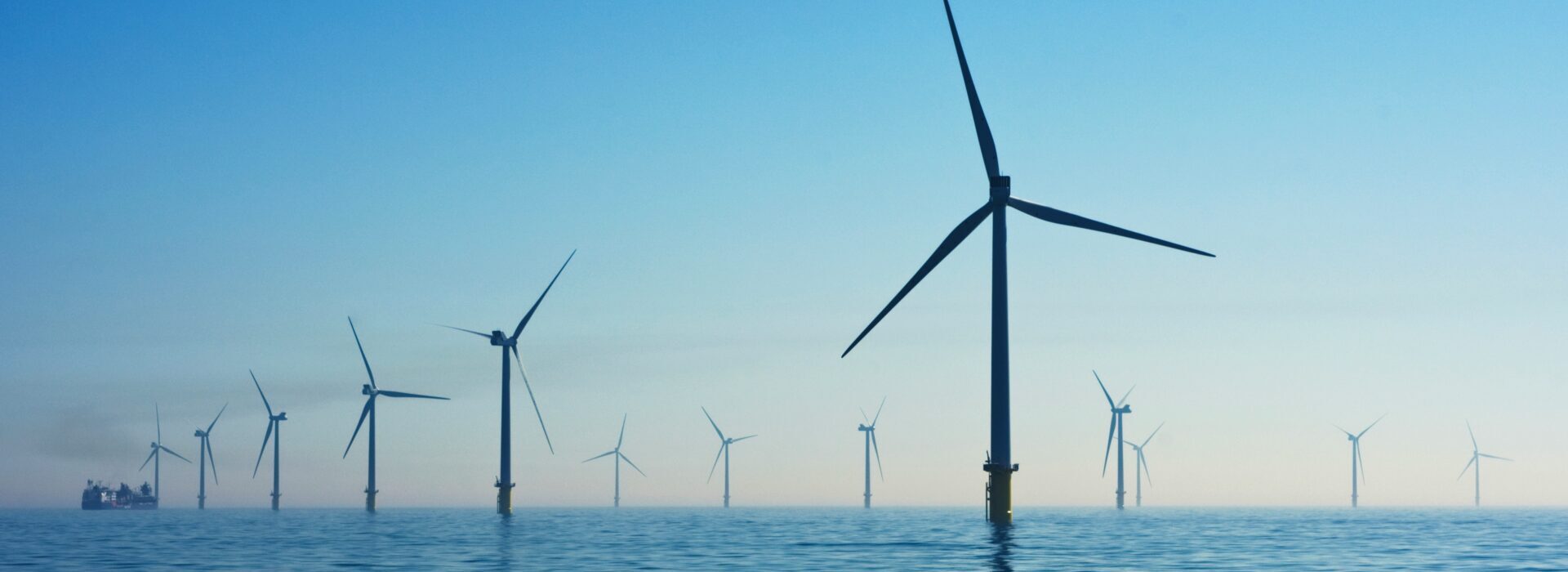
As offshore wind farms spread across the North Sea, growing attention is turning to how expanding this energy resource and nature restoration can go hand in hand. The benefits to the climate are undeniable: Europe needs renewable energy to reduce emissions and limit the damage caused by climate change. With its strong winds, relatively shallow waters and proximity to major energy markets, the North Sea has become one of Europe’s main centres for offshore wind development.
But the North Sea is not an empty space waiting to be developed. It is one of the world’s busiest sea basins, already under intense pressure from shipping, fishing and energy infrastructure, including harmful industries such as oil. As offshore wind expands rapidly across the region, the challenge is not only to find room for turbines. It is to ensure that this expansion does not add to the cumulative pressures already affecting marine ecosystems. The answer to one environmental crisis cannot be to deepen another.
Against this backdrop, the growing debate over ‘multi-use’ at sea, particularly in offshore wind farms, deserves careful scrutiny. Multi-use is an emerging practice involving the combination of different activities at sea, in contrast with more traditional approaches where space is designated for one single use only.
In the context of already degraded marine ecosystems, multi-use should not be about fitting more activities into an already crowded sea basin. It should be about finding ways to reduce pressure on ecosystems and, where possible, actively support nature restoration. Combining activities should therefore only be allowed when it delivers genuine environmental benefits and reduces the cumulative impacts that would result from those activities happening separately.
This should be the fundamental test for multi-use: does it help keep human activities within ecological limits, or does it simply create more opportunities to use an already pressured sea?
This principle should guide the European Union’s revision of the Maritime Spatial Planning Directive and the emerging cross-border work of the Greater North Sea Basin Initiative.
Wind farms are essential to Europe’s climate ambitions, but they are also large industrial installations with environmental consequences, including habitat disturbance, impacts on marine mammals and birds and uncertainty over cumulative effects. Their expansion should therefore be carefully planned through Maritime Spatial Planning and guided by environmental sensitivity mapping to ensure that offshore wind farms are not installed in protected areas and particularly vulnerable areas. In parallel, nature restoration in offshore wind farms may hold some potential when in line with broader conservation and protection objectives. However, considering the overall environmental impact of offshore wind farms and knowledge gaps, especially regarding decommissioning of sites that are too old to still function, restoration in offshore wind farms must not count towards restoration targets. The Rich North Sea Programme, a Dutch initiative led by the North Sea Foundation, provides a concrete example of how restoration can be integrated into offshore wind farms. The programme focuses on restoring natural oyster reefs that were destroyed by decades of overfishing and has also developed a toolbox to facilitate the sharing of best practices on nature-inclusive offshore wind.
The same caution must apply to multi-use involving other economic activities. Combining offshore wind with low-impact aquaculture, such as mussel, oyster or seaweed farming, may hold genuine potential. In some locations and under appropriate conditions, shellfish and seaweed cultivation may provide ecosystem benefits while producing food without the intensive inputs associated with other forms of aquaculture. Offshore wind farms may also provide opportunities for coexistence with passive, low-impact fisheries, helping small-scale coastal fishing communities maintain access to fishing grounds and preserve their economic role. But not every activity belongs in an offshore wind farm. Bottom trawling and intensive aquaculture should not be allowed in offshore wind farms because they would add to environmental pressure in a marine region.
Europe has a rare opportunity to shape multi-use as a tool to reduce pressure on the North Sea. The choice is not between offshore wind and nature. It is between planning within ecological limits and continuing to treat the sea as an endless platform for competing demands. Multi-use can be part of the solution, but only if it creates genuine synergies, reduces cumulative impacts and gives nature more space, not less. The North Sea does not need more clever ways to fit everything in. It needs a new principle: human activities must work within the limits of a living ocean.
Read the joint position paper “Making space for nature. Recommendations for ecosystem-based multi-use”, published by the North Sea Alliance, whose members are Seas At Risk, The North Sea Foundation, Deutsche Umweltilfe, WWF Belgium, WWF Denmark, WWF EU and WWF Germany.
Posted on: 24 August 2026