Seas At Risk, together with its partner NGOs SOMO and PowerShift, commissioned a new study by Öko-Institut.
The study reveals that Europe can reduce its needs for newly mined battery metals while accelerating the transition to clean road transport and strengthening its strategic autonomy. As the EU seeks to secure access to critical raw materials amid growing trade uncertainty, the study highlights several key solutions to cut the need for battery metals: More and better battery recycling, Smaller, more resource-efficient vehicles, Public funding that supports resource efficiency, Better alternatives to car travel, Support for innovation.
The findings come at a crucial moment, as the EU prepares decisions that will shape its approach to critical raw materials, transport and industrial policy, including the forthcoming Circular Economy Act. Forty organisations are calling on the EU to act swiftly on the study’s findings and reduce Europe’s reliance on new mining.
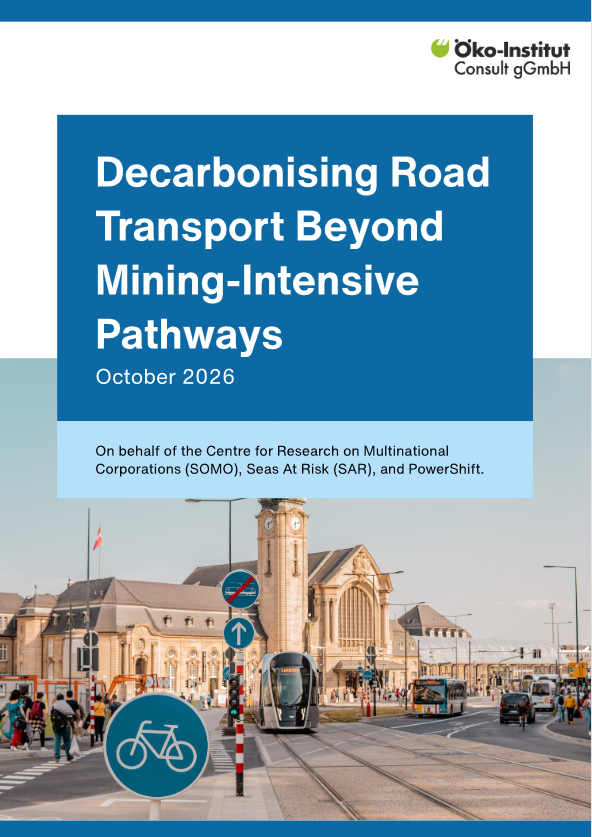
Report and Annex to the report.
Political document:
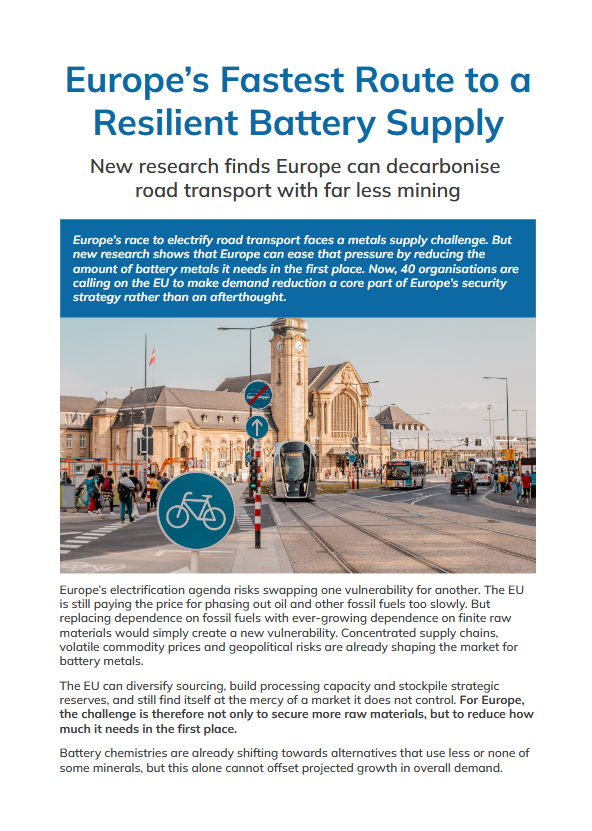
- EN, – Europe’s fastest route to a resilient battery supply.
- FR, – La voie la plus rapide pour une résilience européenne d’approvisionnement de batteries.
- ES, – La vía más rápida de Europa hacia un suministro resiliente de baterías.
- SW, – Europas snabbaste väg mot en resilient batteriförsörjning.
- DE – Europas schnellster Weg zu einer resilienten Batterieversorgung..
- PT – O caminho mais rápido da Europa rumo a um abastecimento resiliente de baterias
POLITICAL DOCUMENT:
REPORT:
Posted on: 19 October 2026