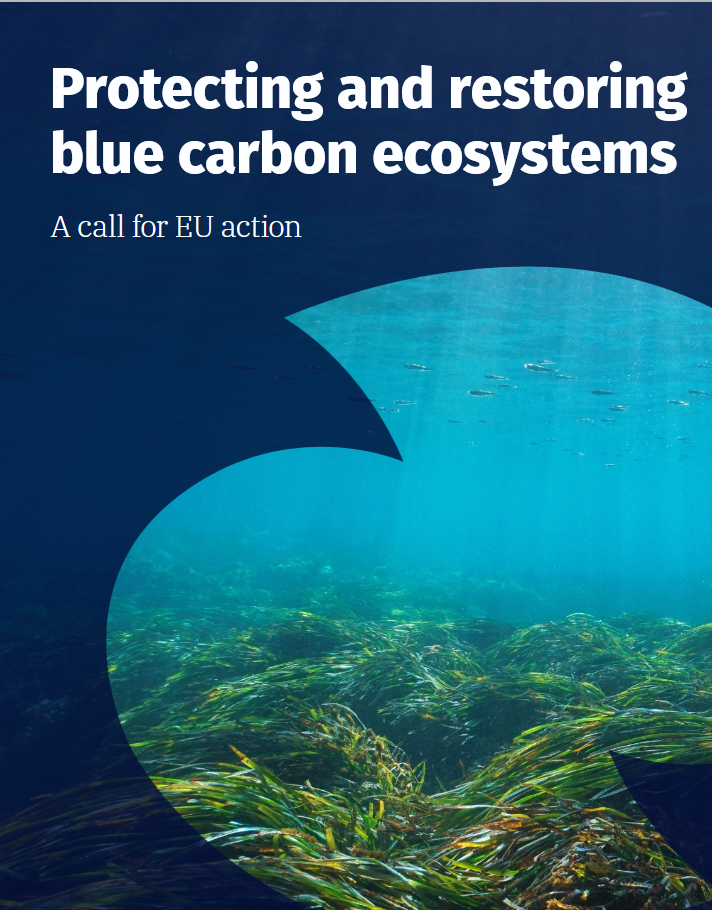
Seas At Risk has published a new position paper on blue carbon, outlining its role in marine ecosystems and its implications for EU climate and ocean policy. Blue carbon refers to carbon captured and stored in coastal and marine ecosystems such as seagrass meadows, salt marshes, and mangroves. These ecosystems are essential not only for carbon storage, but also for supporting biodiversity, improving water quality, and protecting coastlines from erosion and extreme weather.
The paper highlights important scientific uncertainties around the long-term climate mitigation potential of blue carbon. While these ecosystems can store carbon, the amount, duration, and stability of that storage remain difficult to measure and verify. Disturbances such as pollution, bottom trawling, and climate change can even lead to the release of stored carbon. For this reason, Seas At Risk cautions against including blue carbon in carbon offsetting or crediting schemes, where there is a high risk of overstating benefits and enabling greenwashing.
Instead, the paper calls for prioritising the protection and restoration of blue carbon ecosystems for their wide-ranging co-benefits. It urges the EU to strengthen monitoring and research, integrate these ecosystems into biodiversity and climate adaptation policies, and ensure that conservation efforts go hand in hand with rapid emissions reductions.
Posted on: 9 June 2026