From the clothes we wear to the deepest parts of the ocean, synthetic textiles are leaving a trail of plastic pollution. During Ocean Week, scientists, environmental organisations and policymakers came together to deliver a clear message: Europe has the tools to tackle microplastic pollution from textiles. Now it needs to use them.
When we think of plastic in the ocean, we tend to think of plastic bottles, bags and discarded fishing nets, but some of the biggest sources of plastic pollution are the ones we cannot see. In fact, you might be wearing one right now.
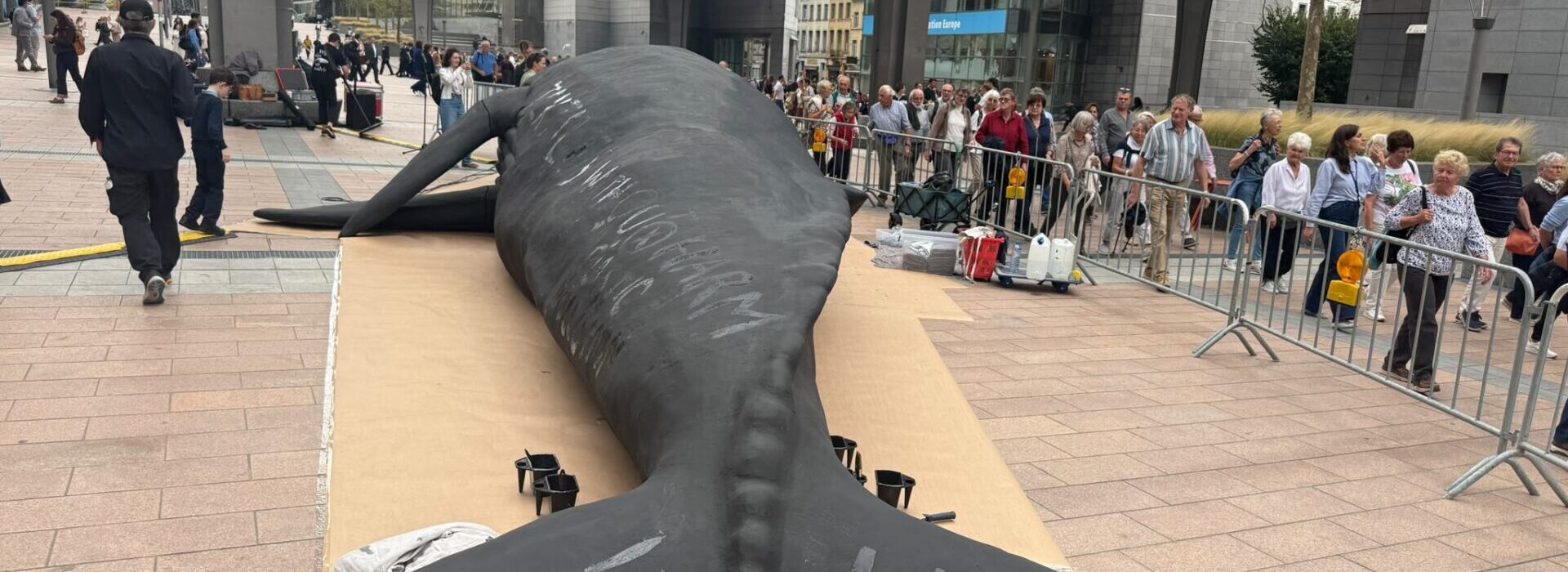
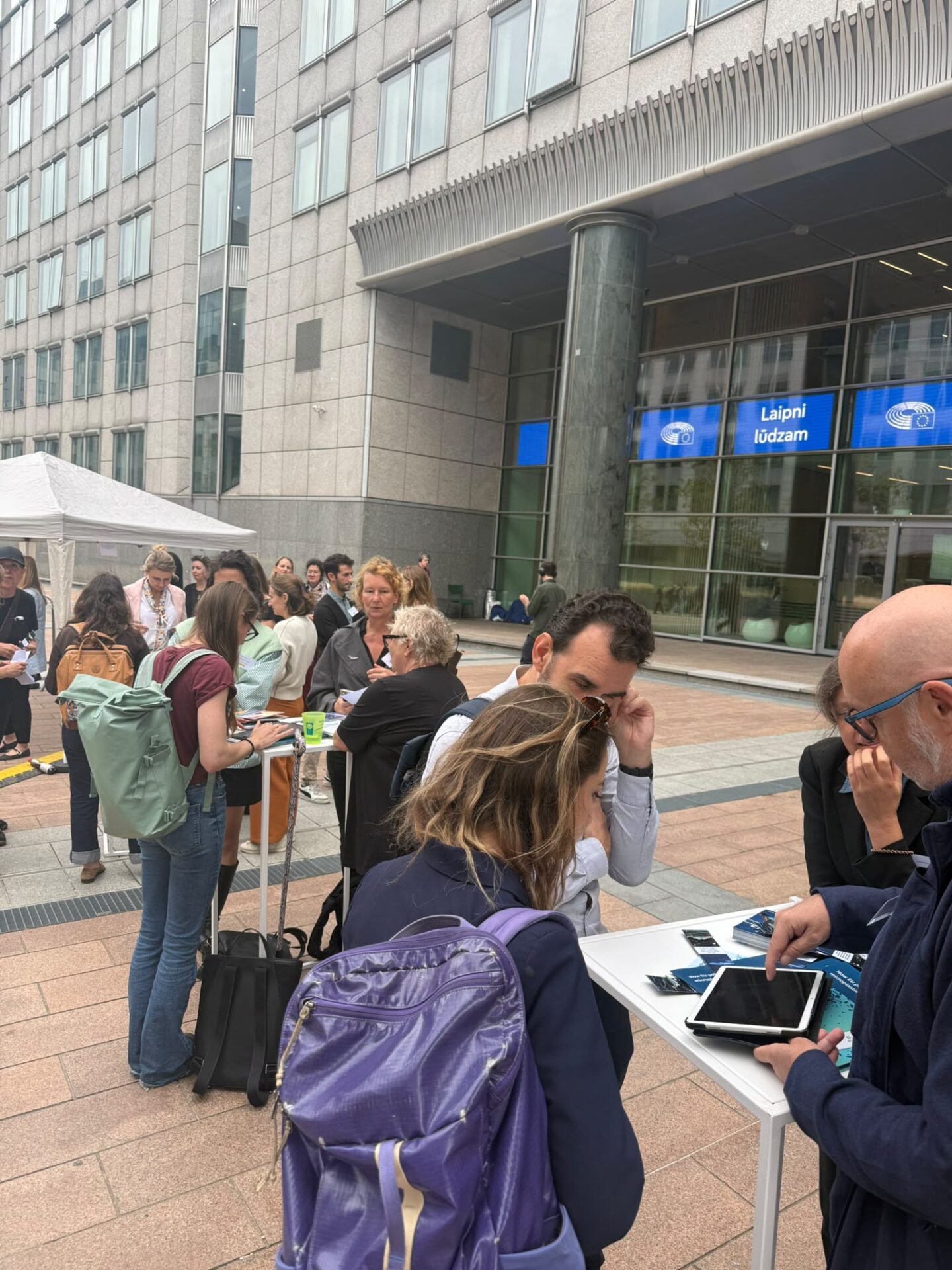
On the 30th September, during Ocean Week, Seas At Risk, ECOS and Pew Charitable Trusts brought together scientists, environmental experts and policymakers on the European Parliament esplanade to shine a light on this often-invisible pollution.
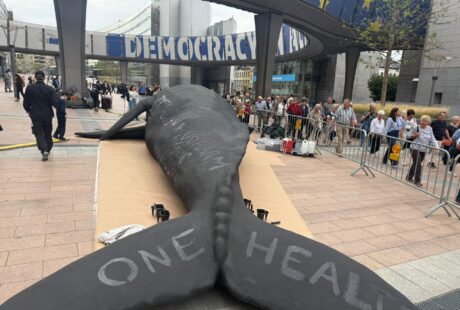
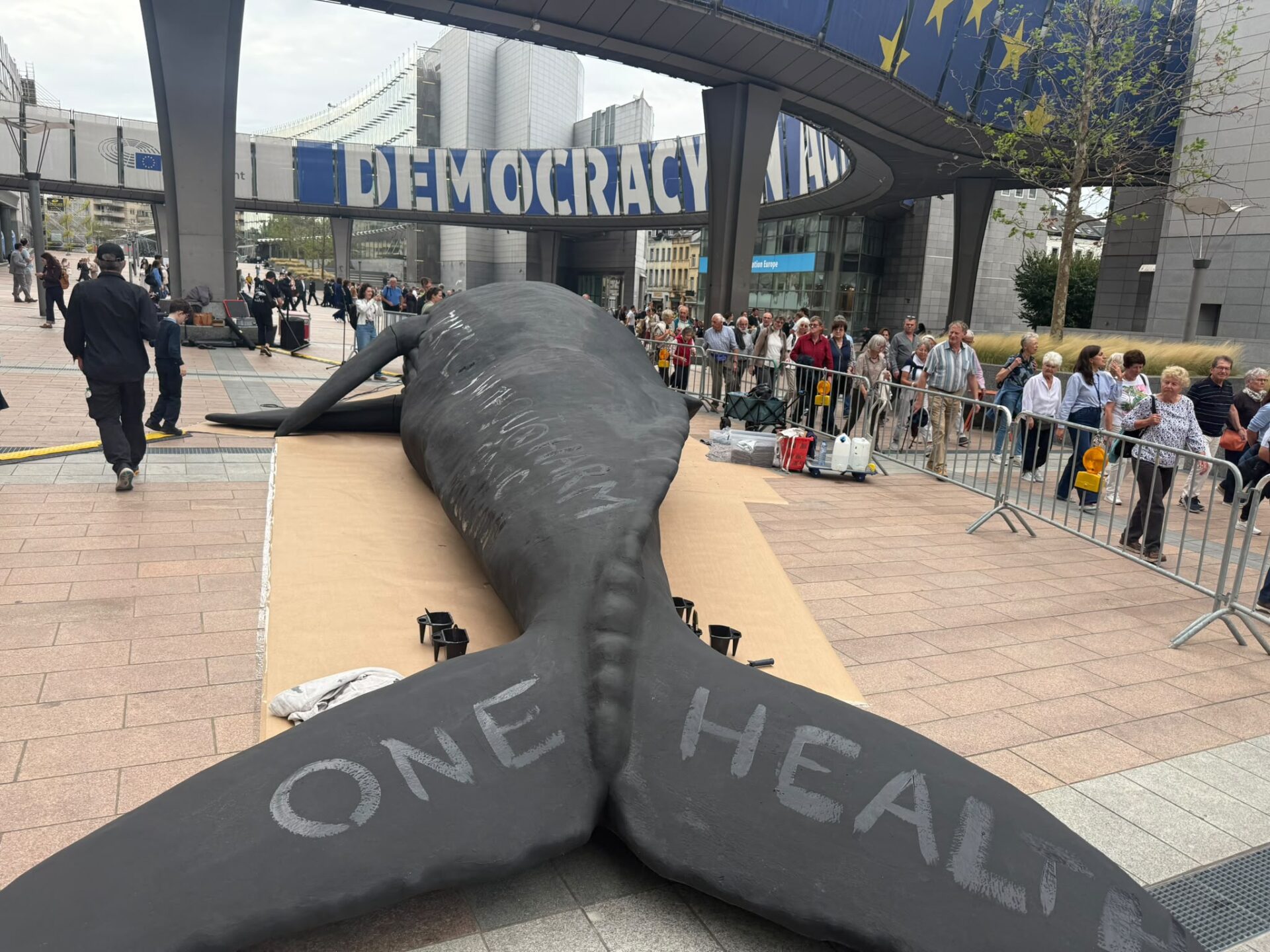
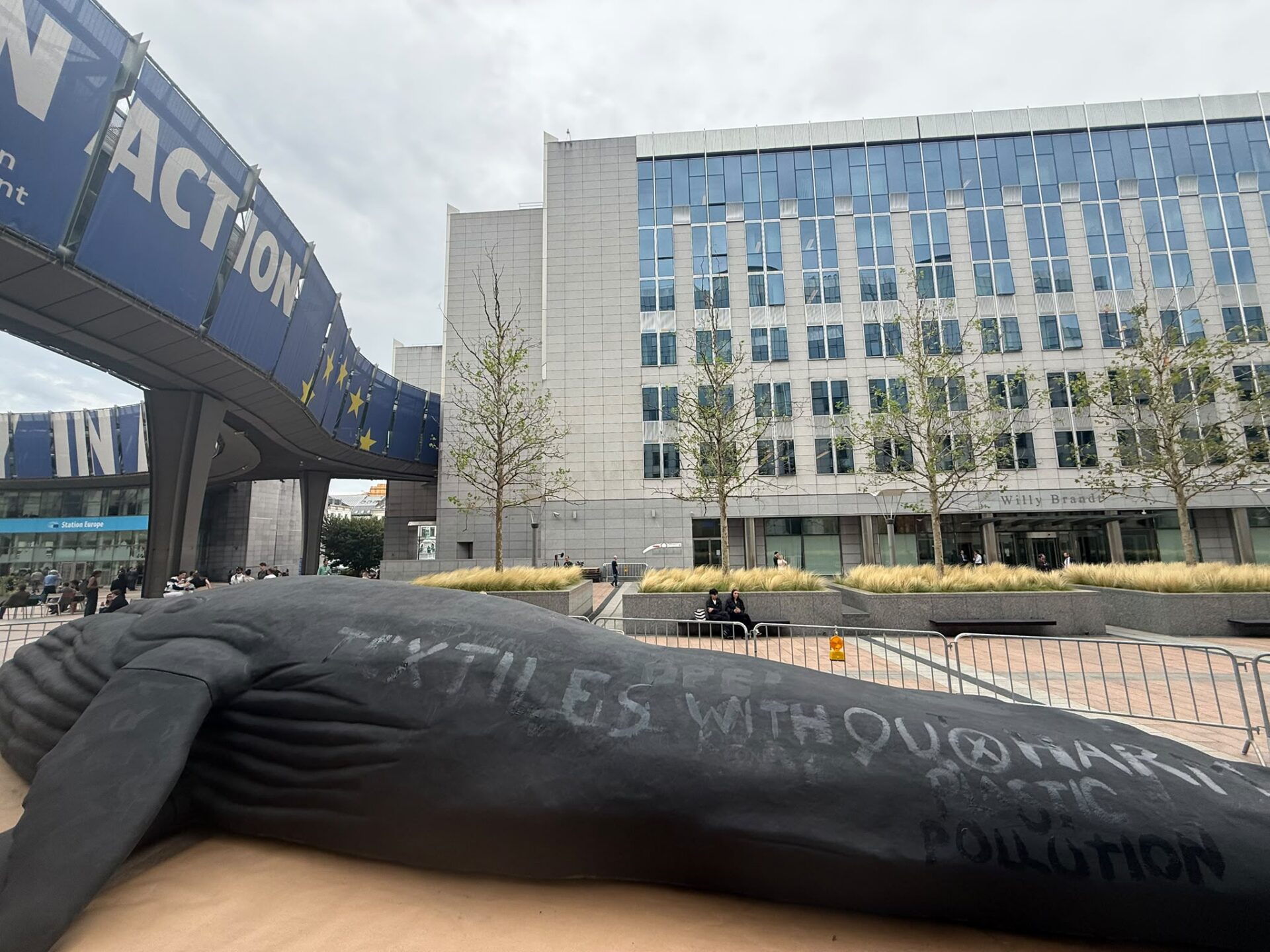
Against the backdrop of a life-sized whale installation, the event “Ocean Plastics Unravelled – The microplastics hidden in your closet”, explored how our clothes are affecting the ocean, marine life and our own health, and what the EU can do about it.
From our wardrobes to every corner of the ocean
From polyester shirts to nylon sportswear, synthetic textiles have become part of our everyday lives. Today, around 70% of textiles produced worldwide are synthetic. Every time we manufacture, cut, wear, wash these materials, tiny plastic fibres are released into the environment which are then transported by air or rivers into the ocean.
Synthetic textiles shed microplastics throughout their entire lifecycle, from manufacturing to everyday use and washing. According to figures highlighted by Green MEP Rasmus Nordqvist, washing synthetic clothes accounts for an estimated 35% of primary microplastics entering the ocean globally. But pollution begins long before clothes reach our wardrobes, nearly half of microfibre shedding occurs during the manufacturing process.
Once released, these tiny fibres travel through the waterways, spread with ocean currents and settle into marine sediments where they remain for decades or even centuries. They have been found in fish, prawns, plankton and mussels. Even in animals living in the deepest ocean trenches. The consequences are alarming. Microplastics can interfere with feeding, carrying harmful chemicals and affect growth and fertility. Nordqvist highlighted research showing that exposure to polyester fibres slowed the growth of mussels by 36%.
The problem does not stop at the ocean. Dr. Heather Leslie, a leading scientist specialising in microplastics and their impacts on the environment and human body, warned that synthetic textiles also expose us to inhaling or ingesting plastic fibres and chemical additives. Textiles can also contain harmful substances such as PFAS, phthalates and heavy metals, raising further questions about chemical exposure and human health.
The EU has made promises but where is the action?
Opening the event, Frederique Mongodin from Seas At Risk highlighted the progress Europe has already made in tackling plastic pollution, from banning certain single-use plastic products to introducing rules on microplastics intentionally added to products and plastic pellet losses, but she warned that a major source of pollution remains largely unaddressed.
And as Luca Boniolo from ECOS reminded participants, the EU has repeatedly committed to tackling microplastics, including through its Zero Pollution Action Plan, which sets a target to reduce microplastic releases by 30% by 2030. The EU Strategy for Sustainable and Circular Textiles also promised action to reduce the unintentional release of microplastics, including through better product design and manufacturing. Yet concrete measures have been slow to materialise.
The EU’s Ecodesign for Sustainable Products Regulation now offers a not-to-be-missed opportunity to change that. With textiles identified as a priority product group, upcoming rules could determine how clothes are designed, produced and placed on the European market. But there is a significant gap. As Nordqvist pointed out, the European Commission’s preparatory work has, so far, failed to propose concrete requirements to reduce microplastic shedding. Instead, much of the discussion has been focused on informing consumers that their clothes contain plastic. “A mussel or a fish can’t read a label,” Nordqvist told participants. Information matters but it will not stop plastic fibres from entering the ocean and our bodies.
Designing pollution out of fashion
The good news is that solutions exist. Scientists and organisations are calling for a shift away from simply managing microplastic pollution once it has been released, towards preventing it in the first place, looking at better textile design.
Clothes can be manufactured using materials and techniques that release fewer synthetic fibres. Longer-lasting garments, improved manufacturing processes and greater use of suitable non-toxic, biodegradable materials could help reduce the amount of plastic entering the environment.
During the event, experts identified three priorities for EU legislation:
- Set limits on microplastic shedding. The EU should introduce “performance” requirements limiting how many microplastic fibres textiles can release. Standardised testing methods already exist to help measure shedding and assess compliance.
- Make producers responsible for pollution. Through Extended Producer Responsibility Schemes, manufacturers whose products release more microplastics should face higher fees. The cost of pollution should not be left to society, wastewater operators and consumers.
- Reduce pollution during manufacturing. Better production techniques, controlled industrial pre-washing and use of natural fibres could prevent significant quantities of microplastics from reaching the environment before clothes are even sold.
But better designed clothes are only part of the solution. The growing volume of clothing produced and consumed also needs to be addressed. Fast and ultra-fast fashion business models encourage the production of cheap, short-lived garments, most of which are produced using synthetic textiles.
Nordqvist, who worked in the fashion industry before entering politics, called for a fundamental shift towards clothes that last longer, shed less and have a lower environmental impact. Recent EU waste legislation offers opportunities to make fast-fashion producers pay higher fees for fast fashion practices. We can ask consumers to buy fewer clothes and prioritise quality over quantity but individual choices cannot replace strong regulation. The responsibility must fall on the companies designing, manufacturing and selling the clothes.
A whale-sized reminder of what’s at stake
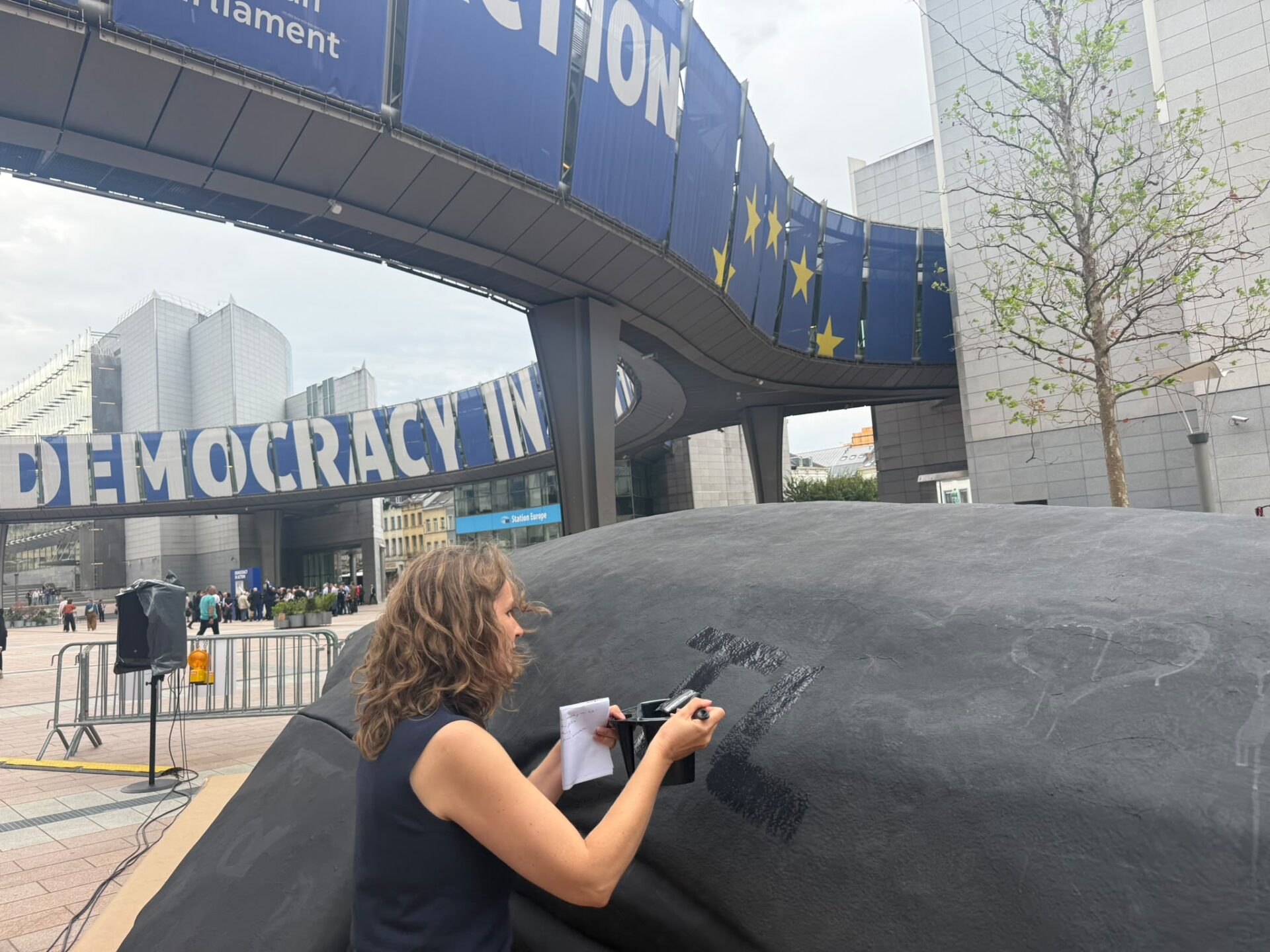
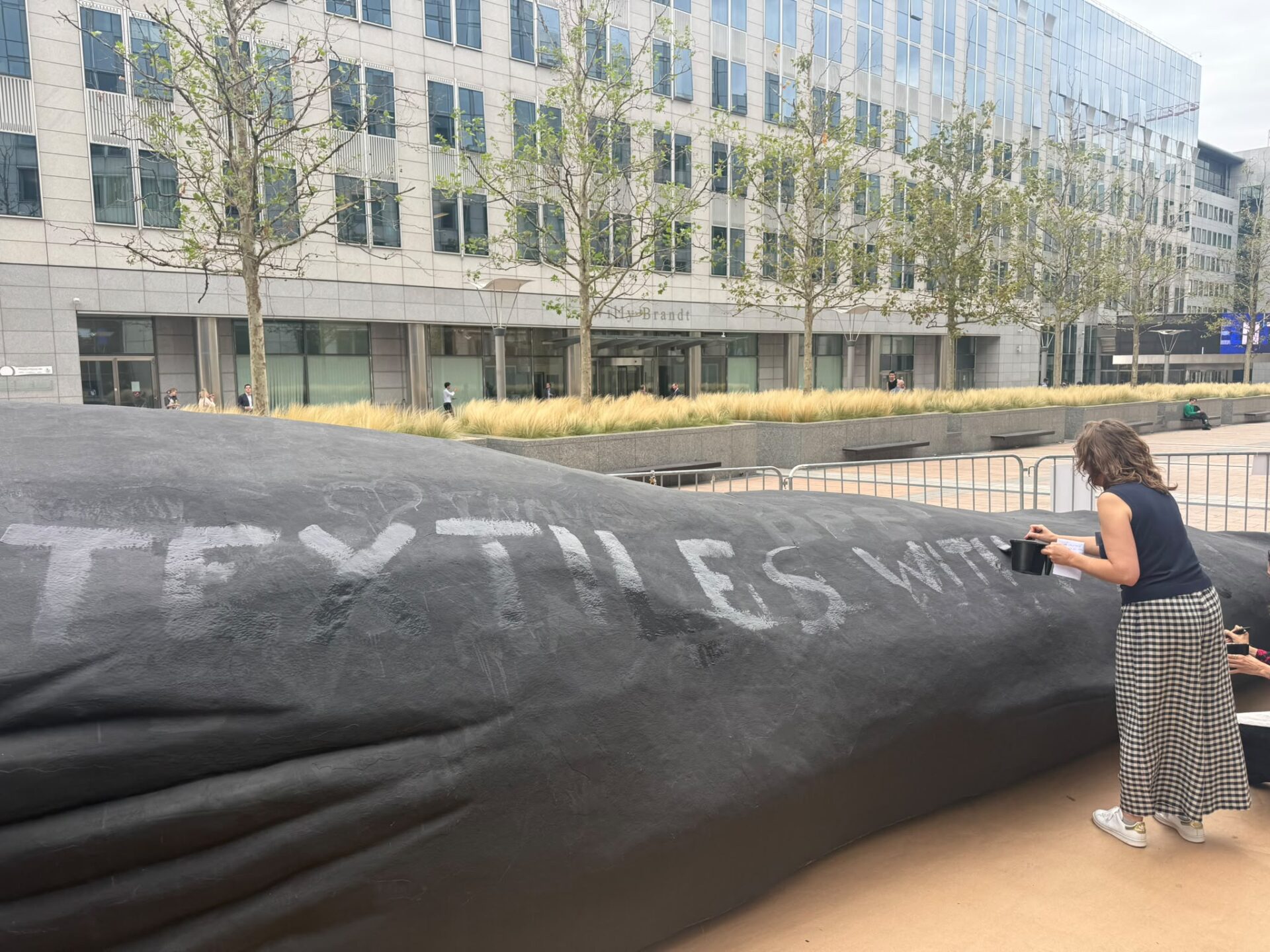
Throughout the event, visitors and experts were invited to paint messages on a life-sized whale installation, turning scientific evidence and policy discussions into a visible call for ocean protection.
The upcoming EU Ecodesign rules for textiles represent a crucial opportunity to change course. With the first rules expected in 2027 and their impact likely to be felt only from 2030, time is running out to deliver on Europe’s pollution prevention ambitions. Protecting the ocean from plastic and microplastic pollution starts long before it reaches the sea. It starts with the way we design and produce the clothes we wear and the textiles in our homes.
Posted on: 15 October 2026